04 January, 2022

What are the Signs of a Sick Baby? The Symptoms of Conditions That Require Neonatal Treatment.

You may be filled with energy and enthusiasm while bringing your baby home from the hospital. However, having a newborn and taking care of him or her in the initial few months can be a stressful and daunting task. One of the major reasons behind worrying is that the baby may get sick often. But how will you know when your newborn gets sick?

Since initially, you do not know the normal behavior of your infant, identifying the newborn signs or newborn symptoms can be difficult. Generally, the newborn signs can be subtle even when the infant is suffering from a serious illness. Since the immune system of the infants is not so strong, you must identify the newborn signs and symptoms and evade any infections. Here’s a guide that will help you to know the newborn symptoms and conditions that require neonatal treatment in your infant.

Newborn symptoms that may require neonatal treatment.

Differentiation between the normal and abnormal conditions in newborns is crucial.  You should watch out for any of the newborn signs that require neonatal treatment and call your doctor when necessary. So here’s a glance at some of the newborn signs that will help you to evade any infection in your infant.

  • Abdominal distention.

Generally, the abdomen of a baby feels soft between feedings. However, if you feel that your infant’s abdomen is hard or swollen then there could be a problem with gas or Constipation. The swollen stomach can even lead to an intestinal infection or problem in case your child hasn’t had a bowel movement for more than a day or two.

  • Blue baby

Generally, newborns may have mildly blue hands, feet, face, tongue, or lips, in case they feel cold or cry hard. However, if you see that the blue coloring persists in your baby for several days along with feeding and breathing issues, then it might be time to visit your doctor. Such newborn signs can be a symptom of an infection or signify an issue in the heart or the lungs.

  •  Coughing while feeding.

 Initially, the newborns may cough while they learn to feed. However, in case your newborn coughs regularly whenever he or she is trying to eat, then it could be a symptom of a problem in the digestive system or the lungs of the child.

  • Amplified crying.

Generally crying is a normal symptom in newborns.  When you see your newborns crying, you can check whether they are warm, fed, and have a clean diaper.  But in rare situations, the newborns may cry and shriek out in different sounds for abnormally long periods. This could be a newborn sign of an illness and hence, you should call a doctor.

  • Jaundice

The mild yellowish tinge in the infants, known as mild jaundice is completely harmless. However, if the build-up of bilirubin in the baby’s blood is heightened, then jaundice may be harmful. If you notice your baby developing jaundice to a high extent, then you should call the doctor.

*Information shared here is for general purpose. Please take doctors’ advice before making any decision.
SIMILAR ARTICLES

blog featured image

24 September, 2026

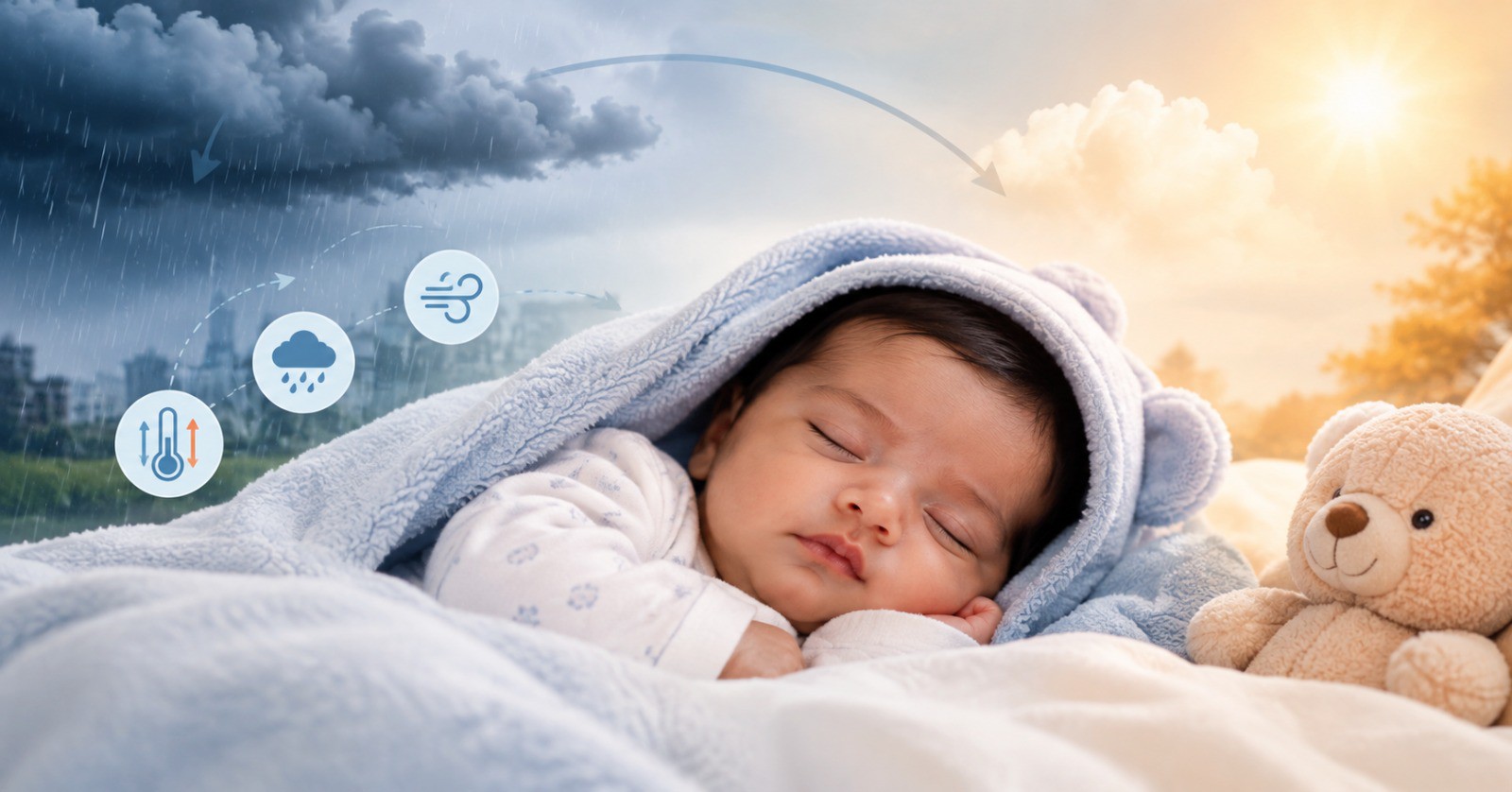
How Sudden Weather Changes Affect Newborn Babies: Health Risks and Care Tips

Newborn babies are more sensitive to changes in their surroundings than older children and adults. Sudden drops in temperature, increased humidity, unusual rains and changes in indoor conditions can affect their comfort and may increase the risk of certain health problems.Because newborns have an immature temperature-regulation system and developing immune systems, parents need to take extra care during sudden weather changes. Premature and low-birth-weight babies may require even closer monitoring.If you are concerned about your baby's health during changing weather conditions, consulting a best children's doctor, best neonatologist or best pediatrician can help ensure timely medical guidance.Why Are Newborns More Sensitive to Weather Changes?A newborn's body is still learning to regulate temperature. Babies can lose body heat more quickly than adults, while excessive clothing or heating can also cause overheating.Weather changes may indirectly affect newborn health through:Exposure to cold temperaturesDamp clothing or beddingHigh humidityPoor indoor ventilationIncreased exposure to respiratory infectionsChanges in feeding and sleep patternsThe goal is to keep your baby warm, dry and comfortable without overheating.1. Low Temperature and HypothermiaCold weather can cause newborns to lose body heat rapidly. If their body temperature falls significantly, it can lead to hypothermia.Parents should watch for signs such as:Cold skin or bodyUnusual sleepinessReduced activityWeak cryingPoor feedingBreathing difficultiesPremature and low-birth-weight babies
blog featured image

12 May, 2020

Measures taken to create COVID free treatment environment for your pregnancy

The outbreak of Coronavirus has disrupted our lifestyle in every manner. Its wrath is no less for pregnant women, and they are also placed in the vulnerable group by the Chief Medical officer in case of immunity. This announcement indicates the extra measures and cares to be taken for them. Nonetheless, with the situation around, pregnancy care has to be continued for the healthy growth of the baby. Antenatal and postnatal appointments cannot be postponed or canceled due to this pandemic. Yet, back in mind, every one of us is scared about contracting the virus when stepped out. KIMS Cuddles, understand the situation, and know at best about your concerns. Hence, we have come up with one of its kind for a screening facility. This facility checks patients and attendants in the gateway, away from the crucial blocks, before they enter into the hospital. The COVID-19 screening (also called Thermal screening) center is designed with complete attention to “safety.” We strongly believe that medical fraternity should never be a cause in transmitting the virus. And every single measure is taken accordingly to provide a virus-free environment for treating pregnant women. What measures are taken inside a thermal screening center? The vital motive behind the set up is to create the safest possible zone for women while entering into the hospital.
blog featured image

05 August, 2020

5 easy tips for caring your newborns’ umbilical cord

Umbilical cord is the little hanging pipe that you see on your baby’s belly after birth. This umbilical cord is originally 50 coms long and connects both the mother and child when the baby is inside. This long organ is generally grown to nourish your baby with food, oxygen, and everything else. After birth, the cord is cut close to the baby’s body as they are fully grown. This little lump looks like a small rope in purplish color and will fall off itself after a few weeks. However, when still attached to the baby, it can actively spread infections to your newborn and hence require your care and attention till it falls off. Here are 5 easy tips you can follow while caring for your newborn’s umbilical cord. Keep it clean and dry all the time   This little slump needs to be clean and dry all the time. Moisture around it attracts the bacteria and causes irritation to the tender skin around it. Hence ensure you clean the cord separately soon after the bath to ensure the cleansing. Do not stamp it under the nappies   Stamping it under the nappies will not expose it to air and attracts the wet from the nappies. Thus, you should always place the nappies below the cord and let the
Loading booking..