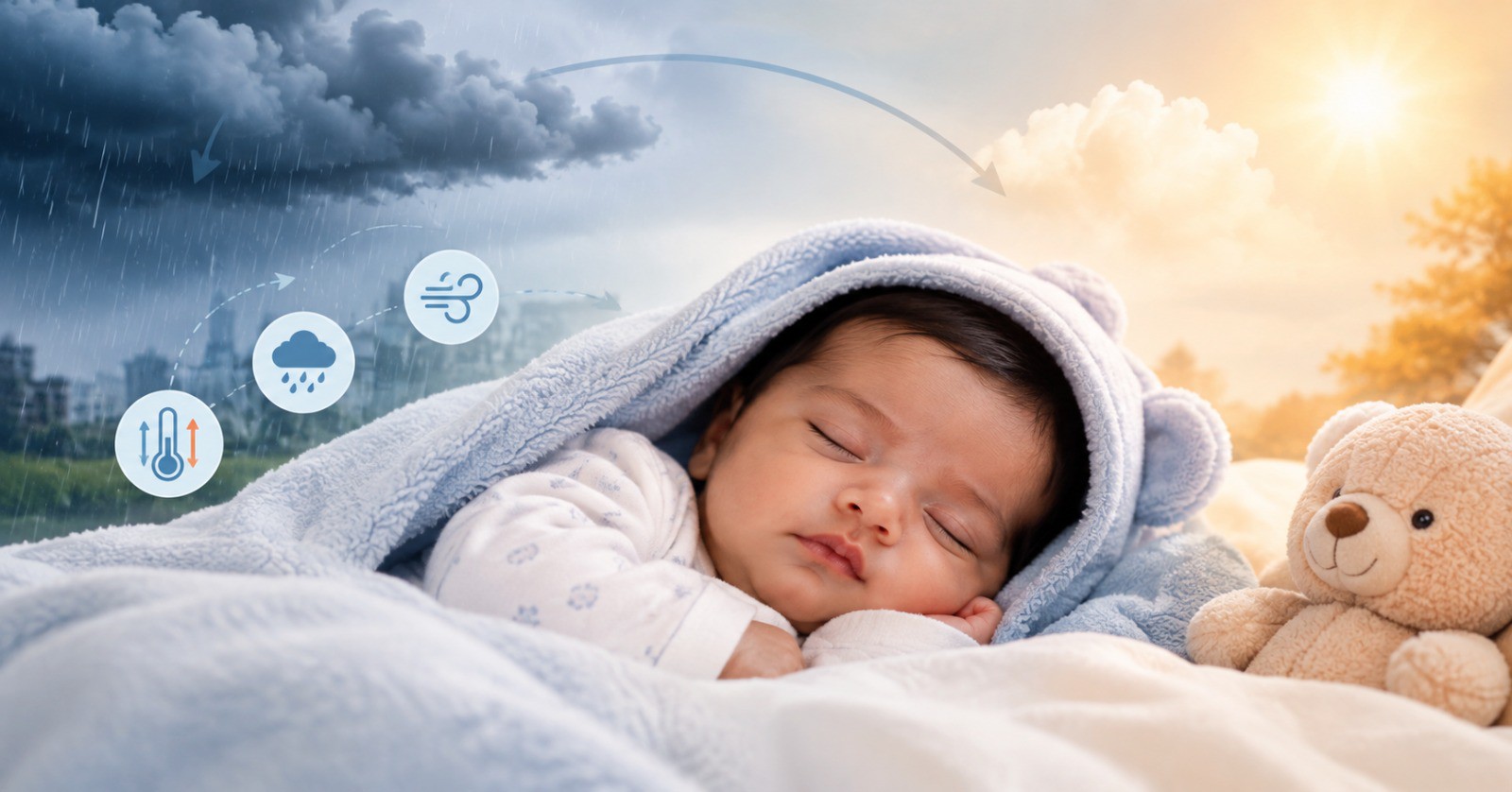
Newborn babies are more sensitive to changes in their surroundings than older children and adults. Sudden drops in temperature, increased humidity, unusual rains and changes in indoor conditions can affect their comfort and may increase the risk of certain health problems.
Because newborns have an immature temperature-regulation system and developing immune systems, parents need to take extra care during sudden weather changes. Premature and low-birth-weight babies may require even closer monitoring.
If you are concerned about your baby's health during changing weather conditions, consulting a best children's doctor, best neonatologist or best pediatrician can help ensure timely medical guidance.
Why Are Newborns More Sensitive to Weather Changes?
A newborn's body is still learning to regulate temperature. Babies can lose body heat more quickly than adults, while excessive clothing or heating can also cause overheating.
Weather changes may indirectly affect newborn health through:
- Exposure to cold temperatures
- Damp clothing or bedding
- High humidity
- Poor indoor ventilation
- Increased exposure to respiratory infections
- Changes in feeding and sleep patterns
The goal is to keep your baby warm, dry and comfortable without overheating.
1. Low Temperature and Hypothermia
Cold weather can cause newborns to lose body heat rapidly. If their body temperature falls significantly, it can lead to hypothermia.
Parents should watch for signs such as:
- Cold skin or body
- Unusual sleepiness
- Reduced activity
- Weak crying
- Poor feeding
- Breathing difficulties
Premature and low-birth-weight babies are particularly vulnerable because they have greater difficulty maintaining their body temperature.
How can parents keep newborns warm?
- Dress the baby appropriately for the room temperature.
- Keep the baby away from direct cold drafts.
- Change wet clothes and bedding immediately.
- Use skin-to-skin contact when recommended by your healthcare provider.
- Continue regular breastfeeding.
Avoid excessive layers or placing the baby directly next to heaters.
2. Can High Humidity Affect Newborn Babies?
High humidity does not directly cause illness, but persistently damp indoor conditions can contribute to discomfort and encourage mould growth.
During rainy weather, parents should check for:
- Damp clothes and blankets
- Wet mattresses
- Condensation
- Poorly ventilated rooms
- Visible mould or fungal growth
Keep your baby's room clean and dry, with adequate ventilation while avoiding direct drafts.
3. Weather Changes and Respiratory Problems
Newborns have small and developing airways, so respiratory infections can become serious quickly.
Watch for:
- Fast breathing
- Difficulty breathing
- Noisy breathing
- Chest retractions or the chest pulling in while breathing
- Persistent cough
- Poor feeding
- Unusual sleepiness
Parents should also minimise contact between newborns and people who have cough, cold, fever or other signs of infection.
If your baby develops breathing difficulty, seek medical attention promptly rather than assuming it is related to the weather.
4. Rainy Weather and Infections
Rain itself does not cause colds or viral infections. However, rainy periods can coincide with increased circulation of respiratory infections and prolonged damp indoor conditions.
Good hygiene is particularly important when caring for a newborn:
- Wash your hands before handling the baby.
- Keep bottles and feeding equipment clean.
- Avoid kissing the baby if you are unwell.
- Limit the baby's exposure to people with infections.
- Follow the recommended vaccination and check-up schedule.
A children's hospital with access to pediatric specialists can provide comprehensive care if a newborn develops symptoms requiring medical evaluation.
5. Avoid Overheating Your Baby
When temperatures fall, parents may be tempted to dress newborns in multiple layers or use heavy blankets. However, overheating can also be harmful.
The baby should be dressed appropriately for the environment rather than being excessively bundled up.
Parents should look for signs of discomfort and follow their paediatrician's recommendations, particularly if the baby was born prematurely or has a medical condition.
6. Feeding During Sudden Weather Changes
Regular feeding remains important regardless of the season. Breastfeeding provides essential nutrition and supports the baby's overall health.
Parents should pay attention if a newborn:
- Feeds significantly less than usual
- Refuses feeds
- Has difficulty sucking
- Becomes unusually sleepy during feeds
Poor feeding in a newborn should not automatically be attributed to changing weather. It can be a sign of illness and may require prompt medical assessment.
7. Which Babies Need Extra Attention?
Some newborns may be particularly vulnerable to temperature changes and infections, including:
- Premature babies
- Low-birth-weight babies
- Babies recently discharged from a NICU
- Babies with breathing problems
- Babies recovering from an illness
- Babies who have difficulty maintaining their body temperature
For these babies, parents should follow the specific instructions provided by their neonatologist or paediatrician.
A best NICU hospital with experienced neonatal specialists can provide advanced monitoring and treatment when newborns require intensive care.
Newborn Care Checklist During Changing Weather
Keep your baby:
- Warm, but not overheated
- Dry and comfortable
- Away from direct drafts
- In clean and dry clothes and bedding
- Regularly fed
- Away from people who are sick
- In a clean and adequately ventilated environment
Monitor your baby for:
- Changes in feeding
- Breathing difficulties
- Fever
- Unusual sleepiness
- Reduced activity
- Persistent coldness
- Changes in behaviour or responsiveness
When Should You Consult a Pediatrician?
Newborns can become seriously ill quickly, so parents should seek medical advice if they notice significant changes in their baby's health.
Contact a best pediatrician or pediatric specialist if your baby develops:
- Difficulty breathing
- Very fast or abnormal breathing
- Poor feeding
- Fever
- Unusual sleepiness or reduced responsiveness
- Persistent coldness
- Seizures
- Any sudden or concerning change in behaviour
If symptoms are severe or sudden, seek emergency medical care immediately.
Choosing the Right Specialist for Your Newborn
When a newborn develops health problems during changing weather conditions, the appropriate specialist depends on the baby's symptoms and medical history.
A paediatrician can assess common childhood and newborn illnesses, while a neonatologist specialises in the care of newborn babies, particularly premature or medically fragile infants. For babies requiring intensive monitoring or treatment, a well-equipped NICU hospital may be necessary.
Parents looking for a best children's doctor, best neonatologist or best pediatrician should consider factors such as the doctor's neonatal experience, availability of appropriate pediatric services and access to emergency or intensive care when required.
Conclusion
Sudden changes in temperature, humidity and rainfall can make newborn care more challenging. However, simple precautions can help parents protect their babies.
Keeping your baby warm without overheating, dry, well-fed and protected from infections is important. Most importantly, parents should not assume that unusual symptoms are simply caused by the weather.
Changes in breathing, feeding, temperature, activity or responsiveness should be taken seriously. Early consultation with a pediatrician, neonatologist or pediatric specialist can help identify problems and ensure appropriate care.
Timely attention can make a significant difference in newborn health.