02 February, 2022

The Ultimate Guide to Taking Care of Toddlers in the Winter

With the cold weather already here, you may be thinking about whether it’s safe for your toddler to play outside or not. However, no matter if the temperatures outside are decreasing, toddlers during the winter require physical activities because they are great stress relievers for them when they are cooped up inside their house for so many hours.

Thus, it is safe for a toddler to play outside during the cold weather. The American Council of Exercise even recommends that the children should receive approximately 60 minutes of physical activity each day. So you may allow your toddler for outdoor play in different intervals by providing them breaks after 10 to 20 minutes.

 Here are several other tips that will facilitate outdoor play for your toddlers while keeping them safe.

  • Dressing Them Properly During Cold Weather

    Toddlers during the winter should be sent outside to play only after dressing them in layers.  The layered dressing will help to keep the body warm of your toddler with scarves, boots, hats, earmuffs, socks or mittens. Additionally, the layers will not only protect your child while they’re playing outside but will also help to retain their body heat through the air pockets present in the different clothes.

    Though your child may become sweaty through outdoor play, you can always take off one layer. It is even recommended to dress your child in an extra layer as compared to an average adult.

  • Helping Them Keep Warm Indoors

    Unlike adults, toddlers cannot regulate their body temperature during cold weather. So, you need to take special care to help keep your toddler warm indoors during the cold weather. For this, you should shut off the windows in case it is extremely cold outside and use a room heater or a humidifier to provide a warm and comfortable environment for your toddler. Additionally, you can keep your toddler’s bed warm by using a warm water bottle and keeping it at the side of your toddler while he or she sleeps.

  • Hygiene Concerns

    With winters just round the corner, comes the season of seasonal flu and cold.  So it becomes necessary to practise the right hygiene for your toddlers and help keep them safe. First of all, you should make sure that your toddler is vaccinated for the flu. Secondly, when your toddler comes home after outdoor play, you should wash their hands properly. You can also provide them with a sanitiser to keep their hands clean. 

    Additionally, in case any other person in the house is already suffering from cold and cough, do not let your kid stay around that person as there is a higher chance of getting infected with the cold and flu. In the end, another hygiene concern for toddlers during the winter is their dry skin. Tell your toddler not to bathe in very hot water and moisturise their skin after bathing.

  • Tips for Keeping Them Active

    You should encourage toddlers to be active during the cold weather by playing outside and participating in their outdoor play yourself. There are a plethora of winter activities like outdoor as well as indoor games. You may play indoor games with your child like Ludo, Carrom or even teach him or her during the free time. Also, allow room for physical activity by letting your kids play outdoor with their friends.

  • Keeping Their Ears From Getting Colds

    There is a higher chance of ear infections in toddlers during winter because of the reduced blood flow to the ear. With the reduced blood flow, the ears lose their capacity to fight off infections. Hence you need to keep your toddler’s ears from getting colds in winter. So let your toddler wear earmuffs or even a woollen hat during the winter that can help to keep frostbite away.

  •  Avoiding Overheating Themselves

    Toddlers have an amplified sensitivity to temperature changes and hence it may become difficult for you to keep your toddlers warm in winter because there is the risk of overheating. You can avoid overheating your toddlers by regulating the layers they wear during winter. It’s crucial to layer up your toddler while he or she is going outside to play or going for a walk. However, reduce the layers once your toddler is peacefully sleeping in the car or is with you indoors.

    So, these are some of the tips for toddlers during the cold weather. Hopefully, this guide will help you to keep your toddler warm during the winter season.

*Information shared here is for general purpose. Please take doctors’ advice before making any decision. 
SIMILAR ARTICLES

blog featured image

29 September, 2026

What Causes Constipation in Children and How Can It Be Prevented?

Constipation is one of the most common reasons parents bring children to a paediatrician, and one of the conditions most frequently dismissed as either not serious or straightforwardly solved by eating more fruit. Neither response reflects how complex and persistent constipation in children can be, or how significantly it affects a child's daily life when it is not properly managed.What Constipation Actually Means?Constipation is more than just passing stool less often. It is a diagnosis made when a child has difficult, painful or incomplete bowel movements, and can happen even if the child passes a stool every day, if those stools are hard, huge, or involve significant straining or discomfort. For children, a practical clinical definition is fewer than three spontaneous bowel movements per week or stools that are hard and unpleasant regardless of frequency.Many parents assume their child will grow out of it. Functional constipation, the most common type, is self-perpetuating if not managed. When passing a stool hurts, the child withholds the next stool. Withheld stool hardens further, making the next passage even more painful. The cycle continues and deepens, eventually causing faecal impaction, where a large hard mass accumulates in the rectum and becomes impossible to pass without medical assistance.Common Causes of Constipation in ChildrenFor families across
blog featured image

28 September, 2026

What Causes Anaemia in Children and How Is It Treated?

Anaemia is one of the most common nutritional conditions affecting children in India, and one of the most consistently undertreated. It is estimated that over 67% of children under five in India are anaemic to some degree, according to National Family Health Survey data. Yet many families do not realise their child is affected until it has been present long enough to impact growth, cognition, and the ability to concentrate at school.What Anaemia Actually IsAnaemia occurs when the blood does not carry enough oxygen to meet the body's needs. In children, this usually happens because red blood cells are too few, too small, or contain insufficient haemoglobin, the protein that carries oxygen. The most common cause worldwide, including in children across Electronic City, Bengaluru and South Bengaluru, is iron deficiency. But anaemia has multiple causes, and the treatment depends entirely on identifying the correct one.Common Causes of Anaemia in ChildrenIron deficiency is responsible for the majority of cases. Iron is essential for haemoglobin production, and children who do not get enough iron through diet, who have increased requirements due to rapid growth, or who have conditions causing chronic blood loss can develop iron deficiency that progresses to anaemia. Toddlers transitioning from breast or formula milk who are not
blog featured image

24 September, 2026

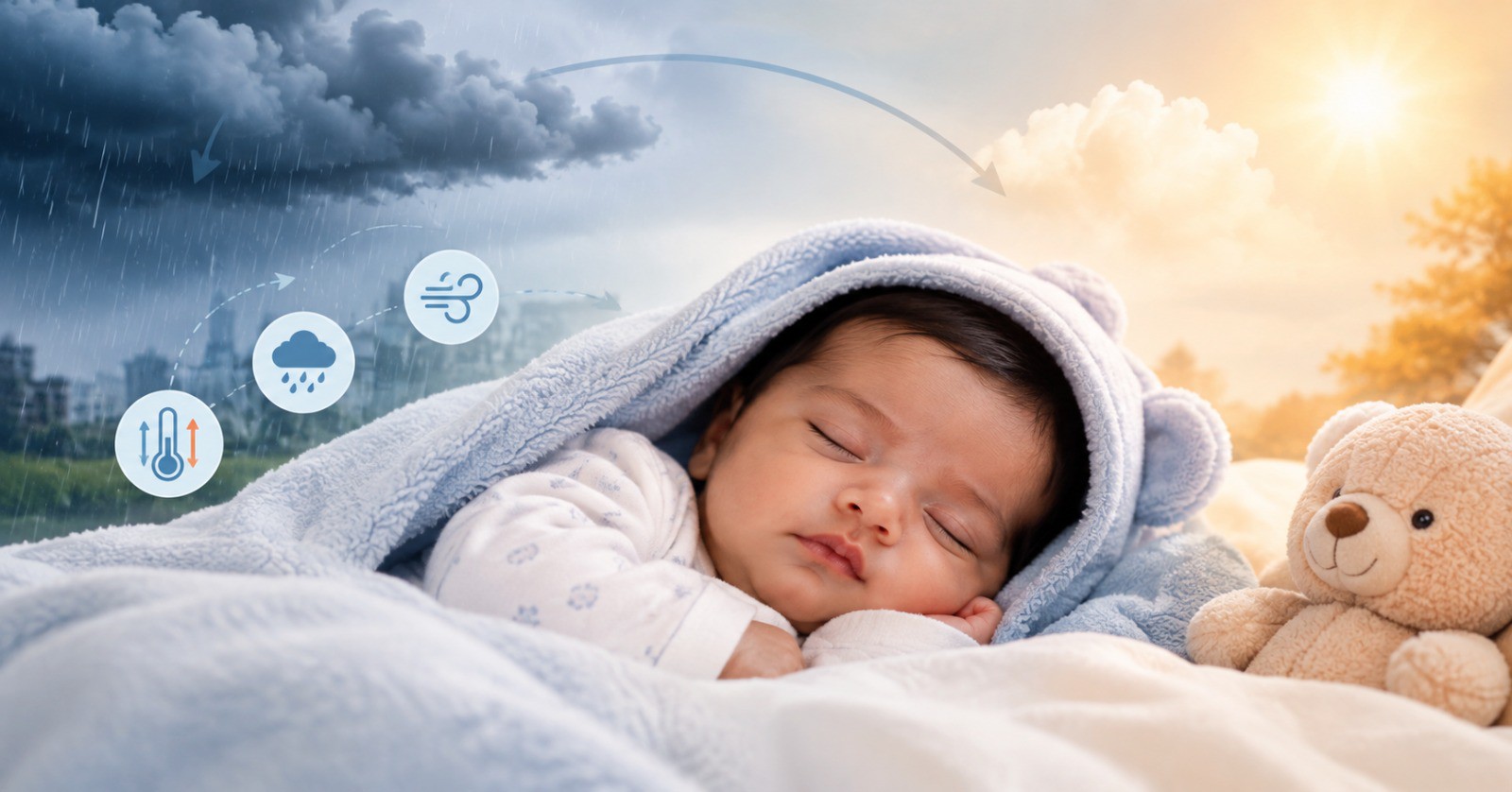
How Sudden Weather Changes Affect Newborn Babies: Health Risks and Care Tips

Newborn babies are more sensitive to changes in their surroundings than older children and adults. Sudden drops in temperature, increased humidity, unusual rains and changes in indoor conditions can affect their comfort and may increase the risk of certain health problems.Because newborns have an immature temperature-regulation system and developing immune systems, parents need to take extra care during sudden weather changes. Premature and low-birth-weight babies may require even closer monitoring.If you are concerned about your baby's health during changing weather conditions, consulting a best children's doctor, best neonatologist or best pediatrician can help ensure timely medical guidance.Why Are Newborns More Sensitive to Weather Changes?A newborn's body is still learning to regulate temperature. Babies can lose body heat more quickly than adults, while excessive clothing or heating can also cause overheating.Weather changes may indirectly affect newborn health through:Exposure to cold temperaturesDamp clothing or beddingHigh humidityPoor indoor ventilationIncreased exposure to respiratory infectionsChanges in feeding and sleep patternsThe goal is to keep your baby warm, dry and comfortable without overheating.1. Low Temperature and HypothermiaCold weather can cause newborns to lose body heat rapidly. If their body temperature falls significantly, it can lead to hypothermia.Parents should watch for signs such as:Cold skin or bodyUnusual sleepinessReduced activityWeak cryingPoor feedingBreathing difficultiesPremature and low-birth-weight babies
Loading booking..