Children get sick. Frequently, and sometimes seemingly one illness after another, particularly in the early years of school or daycare. For most parents, the question is never just "what does my child have?" but also "how worried should I be, and when do I actually need to take them to a doctor?"
Most common childhood infections are self-limiting, meaning the body clears them without specific treatment. But recognising when an illness just needs more care at home versus when it requires a doctor’s eye is a true parenting superpower.
Why Do Children Get Infections So Often
A child's immune system is still developing. Every new virus or bacterium they encounter is largely unfamiliar to their immune defences, which is why young children, especially those attending school or childcare, cycle through respiratory and gastrointestinal illnesses far more frequently than adults. This is normal immune education, not a sign that something is wrong. By the time children reach school age, their immune systems have encountered and learned to fight hundreds of pathogens, and the frequency of infection reduces.
The Common Cold and Upper Respiratory Infections
The common cold is the most frequent childhood infection, caused by one of over 200 viruses, with rhinoviruses being the most common culprits. Symptoms include a runny nose, sneezing, a mild sore throat, and a low-grade fever. Colds usually go away in 7 to 10 days without any treatment.
Most upper respiratory infections in children require supportive care at home. These are the simplest measures: keep the child properly hydrated by offering plenty of fluid (breast milk or formula for infants; water, soups or warm fluids for older children), keep them well rested, and give saline nasal drops or spray to relieve congestion. Because colds are viral, antibiotics provide no benefit and will not work. Avoiding unnecessary antibiotic use protects children from side effects and helps prevent antibiotic resistance. Avoid Over-the-Counter (OTC) cold medicines. Cough and cold syrups are not recommended for infants and young children. They do not clear cold and cause harmful side effects
A doctor should be consulted when the cold is accompanied by a very high fever in a child or fever of 100.4°F(38°c) or higher in an infant <3 months of age, when symptoms worsen rather than improve after a week, or when the child develops ear pain, significant breathing difficulty, irritability, lethargy, refuses to take feeds or appears unusually unwell.
Ear Infections
Middle ear infections are classic sequel to cold. When a child has a cold, fluid can get trapped behind the eardrum and become infected. Symptoms include ear pain, which in younger children may present as ear tugging, irritability, and disturbed sleep. Fever is often present.
How to care them at home: Many ear infections with mild symptoms in children over the age of 2 years resolve without antibiotic treatment, hence watchful waiting for 48 to 72 hours is often recommended.
When to visit the doctor: Younger infants, children with infection in both ears, those with high fever, or any child whose pain is very severe and increasing should be seen promptly. If the child gets frequent, recurring ear infections which seem to cause hearing loss, further testing or referral to an Ear,Nose,Throat (ENT) specialist may be necessary.
Fever in Children- Behaviour Over Numbers
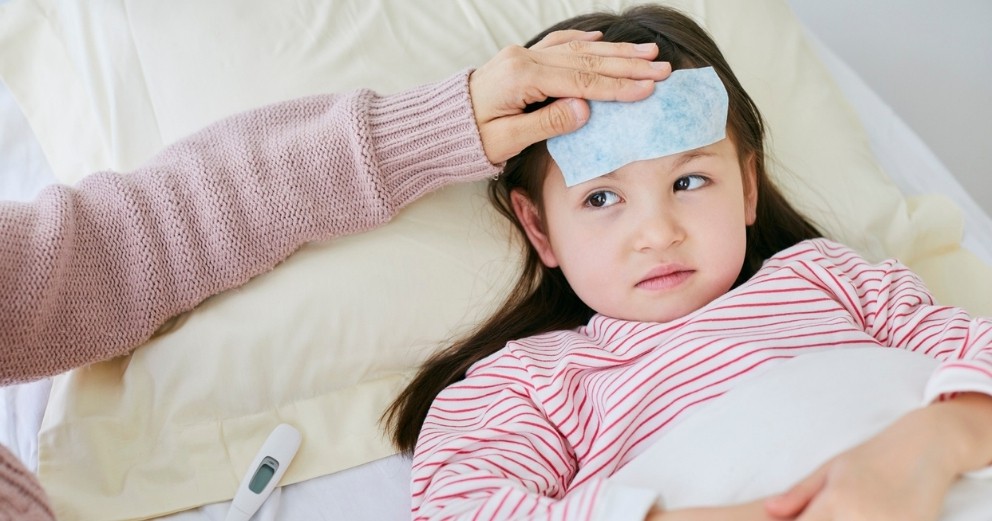
Fever is not a disease, but a sign of disease. It shows that the child’s immune system is actively fighting off an infection. A high temperature does not always mean that the illness is serious. How the child is behaving is much more important than number on the thermometer. Risk factors for childhood infections include attending childcare facilities, poor sleep, and psychological stress.
Managing Fever with adequate rest, fluids, and appropriate temperature-reducing measures at home is reasonable in children over three months of age who remain alert and responsive. Always check the concentration (how much miligram) and format(drops or syrup or tablet) of medication. Confirm the dose and formulation which is safest for the child with the pediatrician before giving the medication.
RED FLAGS for fever: seek urgent medical evaluation if the child is younger than 3 months, has fever lasting more than five days without a clear source, fever accompanied by a rash, stiff neck, sensitivity to light, persistent vomiting, difficulty breathing, or a child who is unusually drowsy and difficult to wake up.
Gastroenteritis (Stomach Bug)
Gastroenteritis causes vomiting, loose stools, and sometimes fever, is extremely common in childhood and is almost always caused by a virus, most frequently rotavirus or norovirus. It is self-limiting in most cases and resolves within three to five days.
How to care for them at home: The absolute priority of caring for a child with gastroenteritis is preventing dehydration. A child may not be able to take in sufficient fluid at once, so small amounts of WHO recommended oral rehydration solution (ORS) mixed with boiled cooled water as per package instruction given repeatedly help the child stay well hydrated. Avoid giving sugary drinks, fruit juices, commercially available packaged energy drinks during active illness.
When to see pediatrician? If the child is dehydration, e.g. no urine passed for 8 hours or more, has dry mouth, no tears on crying, has sunken eyes, extreme lethargy, not taking liquids orally, it is time to see a pediatrician. Infants who get gastroenteritis need more careful observation for signs of dehydration than older children.
Chickenpox and Other Viral Rashes
Chicken-pox is caused by the virus Varicella-Zoster, which presents as itchy rash with blisters on the body that lasts for several days. It is generally mild in otherwise healthy children but can be more serious in newborns, immuno-compromised children, and adults. Providing adequate rest, preventing scratching to avoid secondary infection of the blisters, and ensuring good hydration are the mainstays of home care.
Hand, foot and mouth disease, roseola and fifth disease are other common viral rash diseases in children. Most are benign and self-limiting with supportive care at home. If the rash is associated with high fever or difficulty breathing or excessive drowsiness or inability to take feeds or if the rash consists of flat purple or red spots that do not fade when pressed, seek medical attention immediately as this may be a serious bacterial infection.
Throat Infections (Sore Throat)
Most Sore throats in children are part of viral cold. However, Strep throat is a bacterial infection of the throat that causes more severe symptoms, such as sudden-onset throat pain, fever, enlarged tonsils, and swollen lymph nodes in the neck, and it does not come with cough. A quick throat swab at the hospital confirms it, and treatment is necessary for strep throat to avoid rare but serious complications.
Takeaways
Common childhood infections are a normal part of childhood and usually don't require antibiotics; they can be cared for at home. During illness, the focus is on keeping the child well hydrated, providing adequate rest, monitoring for red flags and seeking help promptly. Focusing on child's overall appearance and behavior than temperature numbers is more important. Because children’s medications come in many different formats and strengths, a quick consultation with pediatrician ensures the safest option for the child based on his/her age and weight.
Admission with a pediatrician will be decided based on the child's age, the severity of the symptoms, any warning signs such as a non-blanching rash or difficulty breathing, and whether the symptoms are improving or deteriorating over time.