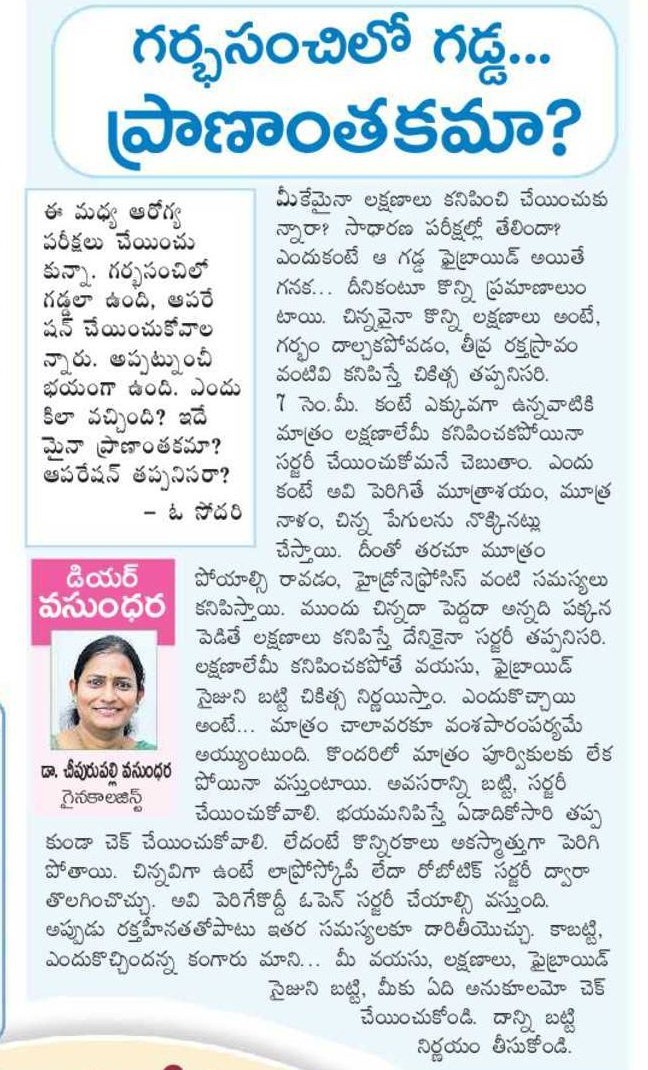
Being diagnosed with a uterine fibroid can feel frightening, but the good news is that fibroids are very common and are usually non-cancerous. Treatment depends on the size of the fibroid, your symptoms, and your age.
When is treatment needed?
• Heavy bleeding
• Difficulty conceiving
• Severe pain or pressure symptoms
• Large fibroids (usually above 7 cm)
As fibroids grow, they may press on nearby organs like the bladder or intestines, causing frequent urination, discomfort, or other complications.
Is surgery always necessary?
Not always. Small fibroids may only need regular monitoring. Depending on the condition, treatment options include:
• Laparoscopic surgery
• Robotic surgery
• Open surgery for larger fibroids
Why do fibroids occur?
In many cases, fibroids are linked to hereditary factors, though they can also occur without any family history.
Timely evaluation and regular follow-ups help in choosing the right treatment at the right time.
Dr. Vasundara Cheepurupalli,
Senior Consultant Gynaecologist, Robotic and Laparoscopic Surgeon, Cosmetic Gynaecologist and Obstetrician,
KIMS Cuddles, Secunderabad