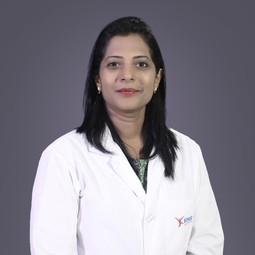
MBBS, MS (OBG), Fellowship in Reproductive Medicine (RGUHS), Dip. Reproductive Medicine (Germany), Fellowship in Regenerative & Cosmetic Gynaecology, PGDMLE, MBA

OP Timing:

MondayTuesdayWednesdayThursdayFridaySaturdaySunday
08:00am -
08:00pm
08:00am -
08:00pm
08:00am -
08:00pm
08:00am -
08:00pm
08:00am -
08:00pm
08:00am -
08:00pm
10:00am -
12:00pm

Qualifications & Education:

  • MBBS – M.S. Ramaiah Medical College, Bengaluru
  • MS (Obstetrics and Gynaecology) – Kempegowda Institute of Medical Sciences, Bengaluru
  • Fellowship in Reproductive Medicine – Dr. Patil’s Fertility and Endoscopy Hospital, Bengaluru (RGUHS)
  • Diploma in Reproductive Medicine – Germany
  • Fellowship in Regenerative and Cosmetic Gynaecology – Israel (IASRM)
  • PGDMLE – National Law School of India University, Bengaluru
  • MBA (Hospital Management)
  • Training in Oocyte Tissue Cryopreservation – Denmark
  • Trained in Stem Cell and Regenerative Medicine – Romanian Society
  • Trained in Robotic Surgery – Intuitive Da Vinci: Amrita Institute of Medical Sciences, Kochi
  • Trained in Obstetric Ultrasound, Laparoscopic and Hysteroscopic Surgeries

Areas of Expertise:

With over 23 years of rich clinical experience, she brings advanced expertise across reproductive medicine, minimally invasive gynaecological surgery, fertility care, and comprehensive women’s health.

  • Advanced Reproductive Medicine and Fertility Preservation
  • Robotic and Laparoscopic Gynaecological Surgery
  • Regenerative and Cosmetic Gynaecology
  • Stem Cell Therapy and Ovarian Rejuvenation
  • High-Risk Pregnancy and Maternal-Fetal Medicine
  • Fertility-Sparing Surgeries
  • Adolescent and Menopausal Health
  • Preventive Women’s Healthcare and Oncofertility

Clinical Interests:

  • Reproductive Endocrinology and Fertility Innovations
  • Regenerative Medicine and Tissue Engineering in Gynaecology
  • Robotic Surgery and Minimally Invasive Techniques
  • Aesthetic and Functional Gynaecology
  • Translational Research and Women’s Health Innovation

Professional Experience:

  • Lead & Senior Consultant – Obstetrics, Gynaecology, and Reproductive Medicine, KIMS Hospitals, Bengaluru
  • Clinical Director – KIMS-Lakshya Fertility Centre
  • Senior Consultant – Kauvery Hospitals, Bengaluru
  • Senior Consultant – Cloudnine Hospitals, Bengaluru
  • Consultant – Narayana Health Hospitals, Bengaluru
  • DNB Guide and Mentor – with 8 years of postgraduate teaching experience
  • Proctor and Mentor – Robotic Surgery in Gynaecology
  • Principal Investigator – Multiple national and international research studies

Awards & Accomplishments:

  • Awarded the Kempegowda Award and Dr. Balagangadharanath Swamiji’s Samaja Seva Award
  • Young Achievers Award – Cloudnine Foundation, 2022
  • Women Healthcare Leader in OBGyn – Asia GCC Award
  • FOGSI Award for Contribution in Obstetrics & Gynaecology
  • Chairman’s Award for Distinguished Services – Narayana Health
  • Surgeon with the Least Learning Curve in Robotic Surgery in India
  • Inspiring Leaders Award – 2022
  • Recognized as CHD Fellow and TEDx Speaker for Robotic Surgery
  • Felicitated by: Federation of Karnataka Chambers of Commerce and Industry, Karnataka Book of Records, Aryavartha Express, Rotary Bengaluru Platinum City, and Hosabelaku Trust for contributions to women’s health and empowerment

Academic & Leadership Roles:

  • President – Karnataka Chapter of ISAR (KISAR), 2025–2027
  • Vice President – Indian Association of Stem Cell and Regenerative Medicine (IASRM), 2025–2027
  • Joint Secretary – Fertility Preservation Society of India
  • Founder Member – Karnataka Chapter, Indian Fertility Society (IFS)
  • Member – ACE, BSOG, ISAR, PCOS Society, Fertility Preservation Society
  • Founder and Clinic Director – ORYA
  • Managing Director – Lakshya Foundation (Charitable Trust)
  • Co-Director –Rotary District: Maternal and Child Health;  Health Camps, Rotary Bengaluru Platinum City

Academic Contributions & Public Engagement:

  • Authored textbook chapters 
  • Published several national and international journal publications
  • Invited Faculty & Speaker at national and international conferences
  • TEDx and TED Circle Speaker – Topics: Robotics in Gynaecology, Our Bodies
  • Regular contributor to TV, radio, print media and online health blogs
  • Chief Guest and Guest Speaker – SFS School, Sri Chaitanya PU College, Jain University, and Presidency College events
  • Invited by MIT and Harvard University for medical innovation discussions
  • Invited by the Taiwan Ministry as an Expert in Maternal and Child Health
  • Patent holder for innovations in medical devices

Languages Known:

English, Kannada, Hindi, Telugu, and Tamil
Doctor Videos


Dr. Lavanya Kiran, 9 Months Full Term Care, Antenatal Care, Caesarean, Colposcopy, Companionship in Labor, Fertility Preservation, Fertility Services, Fetal Medicine, Fitness & Care, Gynaecology Services, Hi-Risk Pregnancy, HSG, Hysteroscopy, ICSI, Instrumental Delivery, IUI, IVF, Laparoscopic and Robotic Procedures, Maternity services, Menopause clinic, Obstetrics, Oocyte Freezing, Ovarian Tissue Preservation, Ovulation Induction, Painless Delivery, PCOD Specialty centre, PMOS Specialty Centre, Postnatal care, Preconception, Pregnancy Nutrition, Preventive Womens Healthcare, Semen Analysis, Vaginal Delivery, VBAC, Woman Health Services, Women's Vaccination


Dr. Lavanya Kiran, 9 Months Full Term Care, Antenatal Care, Caesarean, Colposcopy, Companionship in Labor, Fetal Medicine, Fitness & Care, Gynaecology Services, Hi-Risk Pregnancy, Hysteroscopy, Laparoscopic and Robotic Procedures, Maternity services, Menopause clinic, Obstetrics, Painless Delivery, PCOD Specialty centre, PMOS Specialty Centre, Postnatal care, Pregnancy Nutrition, Preventive Womens Healthcare, Vaginal Delivery, VBAC, Woman Health Services, Women's Vaccination


Dr. Lavanya Kiran, Gynaecology Services, Hi-Risk Pregnancy, Maternity services, Obstetrics

Health Blogs

image

31 August, 2026

Common Causes of Infertility

Authored By:

Infertility is defined as the inability to conceive after twelve months of regular, unprotected intercourse, or six months when the woman is above 35. It affects a significant proportion of couples trying to conceive, and yet it remains a condition many people approach with assumptions that do not reflect the clinical reality. The most persistent of these assumptions is that infertility is primarily a female problem. It is not.The male factor substantially contributes to about 50% of all cases of infertility. The male is solely responsible in about 20% of cases and is a contributing factor in another 30 to 40% of all cases. As male and female causes often coexist, it is essential that both partners are investigated and managed together.Understanding the most common causes on both sides is the starting point for anyone navigating a fertility evaluation.Female infertility causesOvulation disordersMost cases of female infertility are caused by problems with ovulation. Without ovulation, there are no eggs to be fertilised. PCOS is a hormone imbalance problem which can interfere with normal ovulation and is the most common female infertility causes.The most common overall cause of female infertility is failure to ovulate, which occurs in 40% of women with infertility. Polycystic ovary syndrome produces irregular or absent ovulation through insulin resistance and elevated androgen

image

31 August, 2026

When Should Couples Seek Fertility Help?

Authored By:

Most couples who decide they want to start a family assume conception will happen relatively quickly. When it does not, the months of trying can bring a mix of confusion, frustration, and worry, along with a question that many are unsure how to answer: at what point does this become something to investigate medically? The answer depends on age, medical history, and a few specific circumstances that should prompt earlier rather than later action.Waiting too long to seek help is one of the most consistently documented patterns in fertility care. Most couples attempt to conceive for 22.3 months before presenting for fertility evaluation, almost a year beyond the recommended threshold. This delay can impair quality of life, impact treatment outcomes, and increase overall healthcare costs.The standard timelines for seeking helpFor a healthy couple in which the woman is under 35, infertility is typically defined as no pregnancy after 12 months of regular, unprotected intercourse. If the woman is 35 or older, the recommendation is to seek help after six months of trying without conceiving, since female fertility declines with age.If a woman is over 40, or a condition known to cause infertility is present, evaluation should not be delayed at all.These timelines reflect the biology of fertility decline. A 32-year-old and a 39-year-old are not in

image

28 August, 2026

IVF Journey: A Step-by-Step Guide

Authored By:

For couples who have been trying to conceive without success, or for individuals building families through assisted reproduction, the decision to pursue IVF often comes after a long and emotionally demanding period. In vitro fertilisation is one of the most well-established forms of assisted reproductive technology available, and yet the process itself remains opaque for many people who are just beginning to explore it.Understanding what actually happens at each stage, and what to expect emotionally and physically along the way, makes the journey considerably less daunting.What IVF is and who it is forIn vitro fertilisation is a medical process where eggs are collected from the ovaries, fertilised with sperm in a laboratory, and then transferred back into the uterus with the hope of achieving a pregnancy.In vitro fertilisation treatment is recommended when there are blocked or damaged fallopian tubes, severe male factor infertility and unexplained infertility after other treatments have been unsuccessful. Other situations include diminished ovarian reserve, genetic conditions where preimplantation testing is needed, and for single individuals or couples pursuing parenthood. Step 1: Initial consultation and fertility assessmentThe first step is for the doctor to understand the patient’s fertility story. It may involve coming in two to three different times during the menstrual cycle for

image

27 June, 2026

High-risk pregnancy: key precautions

Authored By:

Pregnancy is not always a smooth sail, but in the case of certain women, the stakes are even higher. A high-risk pregnancy is not an indication that something will happen. It implies that some factors, such as pre-existing conditions, age, multiple gestations, and complications occurring during pregnancy, will need to be monitored more carefully, assessed more often, and require a more prepared care team that can handle a wider variety of outcomes.Knowledge of what constitutes a high risk pregnancy and the measures that can be taken to ensure a better outcome than a typical pregnancy would allow women and their families to enter the process with a better grasp of it and less fear.What makes a pregnancy high-risk?High-risk pregnancy conditions are divided into three broad categories: health problems in the mother that are experienced prior to pregnancy, health problems that arise during pregnancy and health problems that affect the fetus.Preexisting conditions that put a pregnancy in the high-risk category are diabetes, high blood pressure, heart disease, kidney disease, autoimmune diseases such as lupus, thyroid diseases, and a history of previous pregnancy complications such as preterm birth, frequent miscarriage, or previous caesarean delivery. Significantly underweight or overweight women before conception have high risks, as well as those who conceive after 35

Loading booking..