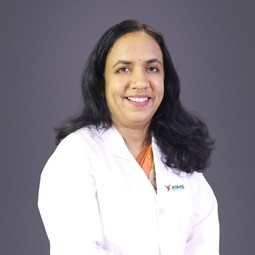
MBBS, MS (Obstetrics & Gynaecology), DNB (Obstetrics & Gynaecology)

OP Timing:

MondayTuesdayWednesdayThursdayFridaySaturdaySunday
09:00am - 03:00pm09:00am - 03:00pm09:00am - 03:00pm09:00am - 03:00pm09:00am - 03:00pm09:00am - 03:00pmNot Available

Qualifications & Education:

  • MBBS – Andhra Medical College, Visakhapatnam
  • MS (Obstetrics & Gynaecology) – Andhra Medical College, Visakhapatnam
  • DNB (Obstetrics & Gynaecology) – National Board of Examinations, New Delhi
  • CIMP – Certified Menopause Practitioner
  • PGDMLE – Postgraduate Diploma in Medical Law & Ethics, National Law School of India University (NLSIU), Bangalore

Certifications:

  • Credentialed Indian Menopause Practitioner (CIMP) – 2017
  • Hysteroscopy Training – Dr. Osama Shawki, 2019
  • Certificate Course in Gestational Diabetes (CCCGDM) – 2021
  • Basics in Infertility & IUI – Dr. Sonal Panchal, 2021
  • Gynae Endoscopy Training – Saidham Hospital, 2022
  • ICOG Certification in Adolescent Gynaecology – 2022
  • ISUOG Basic Ultrasound Training – 2023

Areas of Expertise:

  • High-risk pregnancies & deliveries
  • Menopause counselling and care
  • VBAC (Vaginal Birth After Caesarean)
  • Vaginal & instrumental deliveries
  • Operative & diagnostic hysteroscopies
  • Menstrual problems
  • Cancer screening
  • Advanced gynecological procedures

Clinical Interests:

  • High-risk obstetrics and advanced maternity care
  • Minimally invasive gynecological surgeries
  • Infertility management and reproductive medicine
  • Menopause and adolescent gynecology

Professional Experience:

  • Senior Consultant – Aster Women and Children Hospital, Bangalore
  • Chief OBG Consultant & Managing Partner – Focus Polyclinic, AECS Layout
  • Senior Consultant – Apollo Cradle, Marathahalli
  • Consultant – Aayug Multi-Specialty Hospital, AECS Layout
  • Visiting Consultant – VIMS, Yashomati, Axon, Brookfield & other hospitals
  • Consultant – Own Private Clinic, Bangalore
  • OBG Specialist – Private Clinic, Vizag

Research & Achievements:

  • Distinction in CIMP Exam – 2017
  • Winner – Pediatrics Quiz (Breastfeeding Week), 2004
  • Silver Medal – Science Talent Exam, REC Roorkee, 1994–95
  • All India Talent Scholarship Award, 1991

Community Involvement:

  • Conducted adolescent health workshops & women’s health talks in corporates
  • Actively participated in medical camps with RK Mission, Visakhapatnam
  • Member – National Service Scheme (NSS) & Youth Hostels Association of India

Languages Known:

English, Hindi, Telugu, and Kannada
Patient Testimonials


Ms. Shaswathi

Health Blogs

image

29 July, 2026

PMOS: Causes Beyond Hormones

Authored By:

Most patients understand Polycystic Metabolic Ovarian Syndrome, or PMOS, as a hormonal condition. Irregular periods, elevated androgens, and ovarian cysts on an ultrasound. The hormonal picture is real, but it is only part of the story. Decades of research have made it increasingly clear that PMOS is far more complex than a hormonal imbalance in isolation. It involves the metabolic system, the immune system, the gut, and genetics, all interacting in ways that produce a condition that looks different in every woman who has it.Understanding the fuller picture of what causes PMOS matters because it changes how the condition is managed and why lifestyle interventions work as well as they do.What PMOS Actually InvolvesPolycystic Metabolic Ovarian Syndrome is a complex endocrine and metabolic disorder, typically characterised by hirsutism, hyperandrogenism, ovulatory dysfunction, menstrual disorders, and infertility. The name itself reflects what the condition truly is. The metabolic component is not secondary to the ovarian and hormonal picture. It is central to it. Treating the hormonal symptoms without addressing the underlying metabolic drivers is one reason PMOS management often produces only partial results.Insulin Resistance Sits at the CentrePMOS insulin resistance, where cells throughout the body fail to respond normally to insulin, is considered the primary pathological basis for the reproductive dysfunction seen in PMOS.

image

29 July, 2026

Fertility Decline: What Women Should Know

Authored By:

Conversations about fertility tend to happen too late. Women often begin thinking seriously about their reproductive timeline only when they are ready to conceive. At this point, some of the most important biological facts have already been playing out for years without their awareness. The decline in female fertility with age is one of the most consistently misunderstood aspects of reproductive health, and the gap between what women know and what the biology actually shows is significant.This is not about creating anxiety. It is about giving women accurate information early enough to make genuinely informed decisions.The Fundamental BiologyA woman is born with all the eggs she is going to have in her lifetime. Her eggs age with her, decreasing in quality and quantity. Age is the single most important factor affecting a woman's fertility.Females are born with a finite number of oocytes. The number of oocytes peaks in the womb at around 20 weeks of gestation and subsequently declines steadily until approximately age 32, after which the number decreases at a greater rate until age 37, beyond which oocyte numbers drop even more rapidly.This is not something that can be slowed by fitness, diet, or general good health. Even though women today are healthier and taking better care of themselves than ever before, improved

Loading booking..