
24 August, 2018

Signs of Twin or Multiple Pregnancy

Some mothers who are pregnant with twins or multiples say that they knew they were carrying more than one baby from the start. An ultrasound is the surest way of knowing whether you’re carrying twins, but there may be several signs and symptoms to indicate the same.

That said, it is exciting to wonder if certain signs are clues that you’re carrying more than one baby. Here are a few potential hints:

  1. Elevated hCG levels

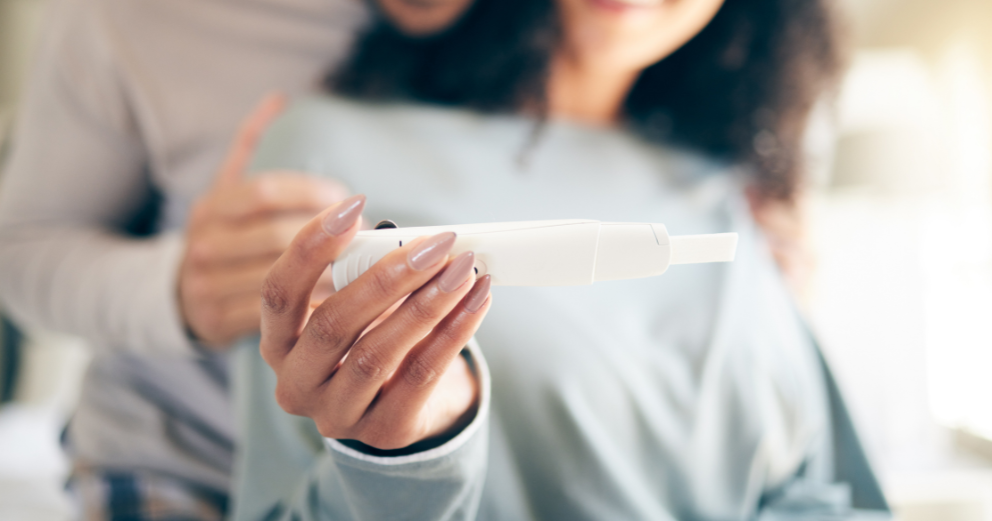
It may be difficult to distinguish a single pregnancy from multiples, based on a urine pregnancy test. However, a very early positive pregnancy test might indicate twins. At-home pregnancy tests simply measure whether or not a minimum amount of hCG is present. They do not predict the amount, which a blood pregnancy test can do. Regardless, elevated hCG in pregnancy may be one of the indicators but not always mean you have twin pregnancy.

  1. Doppler Heartbeat Count

A Doppler system amplifies fetal heart sounds using harmless sound waves. Your doctor may be able to detect more than one heartbeat late in first trimester, indicating a multiple pregnancy. Listening to a baby’s heartbeat early on in pregnancy may be misleading, and may actually be the same baby’s heartbeat heard from another angle. However, it sure is exciting to think about the possibility of twins.

  1. More Morning Sickness

There is an old wives’ tale that goes “Twice as sick, three times as tired, and four times the weight gain.” Statistically speaking, moms of multiple experience more morning sickness, but it doesn’t mean that every mom with severe morning sickness is carrying twins. Sometimes, moms of twins may not experience any morning sickness. A potential sign is that women carrying multiples may begin having nausea quite early, even before a pregnancy test turns positive. However, this is simply an observation and not a scientific fact.

  1. Measuring large for Gestational Age

Carrying two or more babies is surely going to have an impact on the woman’s body. The moms of twins are likely to gain more weight and their uterus will also stretch and expand to accommodate the extra baby. Doctors usually monitor weight gain and fundal height during routine checkup. An excess of any of these may indicate multiple pregnancy.

  1. Feeling Fetal Movement Early

Feeling your baby move inside your womb is one of the best feelings during pregnancy. Women can usually feel this sensation about midway through the pregnancy, between 16 and 25 weeks. Although not scientifically verified, moms of twins have reported feeling movement earlier and more frequently in pregnancy, than those with singletons. So if you’re feeling early or frequent movement, be sure to mention it to your doctor.

Your gut feeling may also be a strong indicator of twins and multiples. Trust your motherly instinct and tell your doctor about whatever it is that you’re feeling. They’ll conduct an ultrasound to tell if you’re right and give you the appropriate medical attention that is needed for multiple pregnancy. Visit us at KIMS Cuddles to enjoy your pregnancy without any worry.

*Information shared here is for general purpose Please take doctors’ advice before taking any decision.
SIMILAR ARTICLES

blog featured image

29 July, 2026

Irregular Periods: When to Investigate

Period irregularity is something many women experience at some point, and most learn to live with it, at least for a while. A late period during a stressful month, a lighter cycle after illness, a missed period after a long flight. These variations are common and usually self-correcting. The problem is that irregular periods are also how the body signals conditions that genuinely need attention, and because the irregularity can feel familiar, it is easy to keep waiting for things to normalise when they never will without proper evaluation.Knowing where the line sits between normal variation and something worth investigating is genuinely useful.What counts as irregularA normal menstrual cycle runs anywhere from 24 to 38 days, measured from the first day of one period to the first day of the next. Variation of up to eight days between the shortest and longest cycle is considered normal. Lengths ranging between 8 and 20 days of variation are considered moderately irregular, and variation of 21 days or more is considered very irregular.Changes outside the cycle length are also irregular. Periods that are either much heavier or lighter than normal, periods that are much longer or shorter than normal, periods between periods, and periods that are absent altogether, in a woman not pregnant, breastfeeding, or in menopause,
blog featured image

29 July, 2026

Fertility Decline: What Women Should Know

Conversations about fertility tend to happen too late. Women often begin thinking seriously about their reproductive timeline only when they are ready to conceive. At this point, some of the most important biological facts have already been playing out for years without their awareness. The decline in female fertility with age is one of the most consistently misunderstood aspects of reproductive health, and the gap between what women know and what the biology actually shows is significant.This is not about creating anxiety. It is about giving women accurate information early enough to make genuinely informed decisions.The Fundamental BiologyA woman is born with all the eggs she is going to have in her lifetime. Her eggs age with her, decreasing in quality and quantity. Age is the single most important factor affecting a woman's fertility.Females are born with a finite number of oocytes. The number of oocytes peaks in the womb at around 20 weeks of gestation and subsequently declines steadily until approximately age 32, after which the number decreases at a greater rate until age 37, beyond which oocyte numbers drop even more rapidly.This is not something that can be slowed by fitness, diet, or general good health. Even though women today are healthier and taking better care of themselves than ever before, improved
blog featured image

29 July, 2026

PMOS: Causes Beyond Hormones

Most patients understand Polycystic Metabolic Ovarian Syndrome, or PMOS, as a hormonal condition. Irregular periods, elevated androgens, and ovarian cysts on an ultrasound. The hormonal picture is real, but it is only part of the story. Decades of research have made it increasingly clear that PMOS is far more complex than a hormonal imbalance in isolation. It involves the metabolic system, the immune system, the gut, and genetics, all interacting in ways that produce a condition that looks different in every woman who has it.Understanding the fuller picture of what causes PMOS matters because it changes how the condition is managed and why lifestyle interventions work as well as they do.What PMOS Actually InvolvesPolycystic Metabolic Ovarian Syndrome is a complex endocrine and metabolic disorder, typically characterised by hirsutism, hyperandrogenism, ovulatory dysfunction, menstrual disorders, and infertility. The name itself reflects what the condition truly is. The metabolic component is not secondary to the ovarian and hormonal picture. It is central to it. Treating the hormonal symptoms without addressing the underlying metabolic drivers is one reason PMOS management often produces only partial results.Insulin Resistance Sits at the CentrePMOS insulin resistance, where cells throughout the body fail to respond normally to insulin, is considered the primary pathological basis for the reproductive dysfunction seen in PMOS.
Loading booking..